Coevolving Innovations

… in Business Organizations and Information Technologies

Why (Intervene in) Systems Changes?

With a focus on “ecological systems”, the second of four lectures planned for the Systemic Design course in the Master’s program in Strategic Foresight and Innovation at OCAD University proceeded as a timeboxed presentation:  targeting 40 minutes of content (skipping slides to stay within time constraints), followed by 10 minutes of discussion.  Since the slides are rich with content and links to sources, students were directed to pay attention to what I was saying, over trying to read the slides projected behind me. 

The agenda was in four sections:

  • [preamble] Errors, Attention and Traps (Ecological Understanding)
    • Systems Changes Learning Circle (Bateson, Gibson, Ingold)
    • (Resistances to) Changing as primary system of interest
  • A. Socio-Ecological Systems Perspective
    • Tavistock Institute (Emery, Trist)
    • Organization as primary system of interest
  • B. (Social-) Ecological Systems  + Panarchy
    • Stockholm Resilience Centre (Holling, Walker, Peterson)
    • Ecology as primary system of interest
  • C. The Ecosystem Approach
    • Resilience Alliance (Waltner-Toews, Kay)
    • Sustainable development project as primary system of interest

Online, the video is available on Youtube for streaming.

Viewers who prefer to watch video on a disconnected device can download a video file.

Video H.264 MP4 WebM
January 31
(1h18m)
[20200129_OCADU_Ing HD m4v]
(HD 2666kbps 1.2GB)
[20200129_OCADU_Ing nHD m4v]
(nHD 1352kps 637MB)
[20200129_OCADU_Ing HD webm]
(HD VP8 425kbps 292MB)
[20200129_OCADU_Ing nHD webm]
(nHD VP8 224kbps 156MB)

Readers who want to follow through on web link references may want to review the slides directly.… Read more (in a new tab)

Are Systems Changes Different from System + Change?

The Systems Changes Learning Circle has met at least every 3 weeks over the past year.  As part of an hour+ lecture to introduce systems thinking, students in the Systemic Design course in the Master’s program in Strategic Foresight and Innovation at OCAD University were immersed in questions where we’ve focused our attention, complemented by background into traditional foundational materials.  An audio recording has now been matched up with presentation slides, so that learners outside the classroom can partially share in the experience.

This lecture begins with the rising interest in “systems change”, that is related to “theory of change” from funders of social innovation programs.  From there, the lecture aims to recast (speak in a different way) and reify (make some specified ideas more prominent) an understanding of systems thinking.

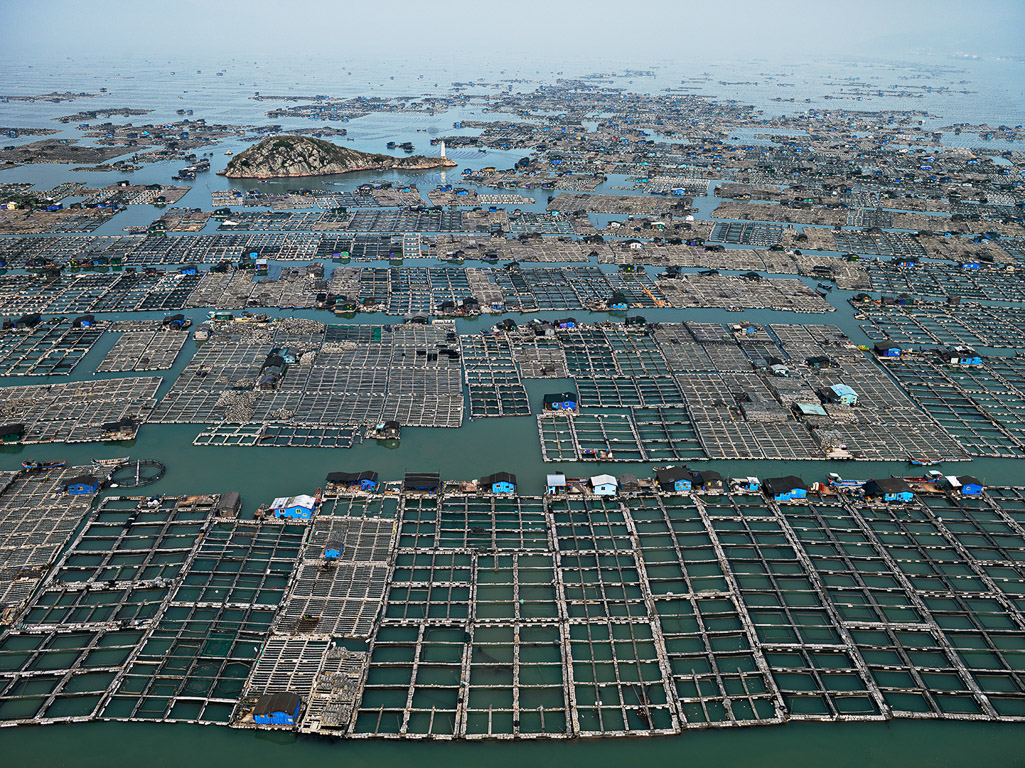
The presentation was overprepared — we can’t predict how engaged students will be on the ideas, before their brains are full.  Of 55 slides, we stopped on slide 37.  For streaming, the video is accessible on Youtube. (with a 6-minute excerpt on the Luoyang Bay abalone farms from the documentary Watermark, by Edward Burtynsky, removed).

Viewers who prefer to watch video on a disconnected device can download a video file.

Video H.264 MP4 WebM
January 17
(1h18m)
[20200117_OCADU_Ing HD m4v]
(HD 2814kbps 1.7GB)
[20200117_OCADU_Ing nHD m4v]
(nHD 210kkps 179MB)
[20200117_OCADU_Ing HD webm]
(HD 470kbps 392MB)
[20200117_OCADU_Ing nHD webm]
(nHD VP8 114kbps 184MB)

Readers interested in the full set of 55 slides are welcomed to view them online or download them.… Read more (in a new tab)

Ecology and Economy: Systems Changes Ahead?

Following the workshop at 2019 CANSEE Conference, cohosted with David L. Hawk, we were invited to contribute an article to a special issue of WEI Magazine.  Here’s the abstract for the workshop in May:

Systems Changes, Environmental Deterioration

This dialogue-oriented workshop will be framed by two short position papers (< 30 minutes each) towards energizing a discussion on the prospects for systems thinking and ecological economics.

(1) Systems Changes research program

Shifting the emphasis from stable states to a fluid world, what patterns describe shifts due to (i) human will, and (ii) nature? The Systems Changes program aims to extend research from the 1970s (e.g. West Churchman systems approach; Horst Rittel wicked problems; Christopher Alexander pattern language; Eric Trist and Cal Pava action learning) with 21st century advances (e.g. holons and hierarchy theory; resilience science; ecological anthropology; open sourcing).

(2) Environmental Deterioration: What have we learned about systems change(s) over the past 50 years?

Since the 1960s, nations have enacted regulations towards environment issues, sustainability of resources and stewardship of the environment: USA EPA (1969); Canadian EPA (1988/1999); EU Treaty of Maastricht (1993). Yet in 2009, the Stockholm Resilience Centre declared that human activity has exceeded two thresholds of nine planetary boundaries. Is it too late for the human race to act, or even to try? The 1979 Ph.D. dissertation on “Regulation of Environmental Deterioration” from the University of Pennsylvania will be considered retrospectively.

(3) Dialectic: Group Discussion

In an open group discussion, in what ways might a shift from “systems thinking” towards “systems changes” make a difference (or not)?

… Read more (in a new tab)

Open Learning Commons, with the Digital Life Collective

With governance of online communications a problematique, the Systems Changes learning circle has actively been advancing our collaborations on the Open Learning Commons as an open platform, and the Digital Life Collective for semi-private communications.  Complementing the Systems Community of Inquiry, this combination of technologies presents alternatives for Systems Thinking communities who are uncomfortable with the terms and conditions of commercial providers (e.g. Facebook, LinkedIn).

The systems sciences community was invited to participate in workshops at the ISSS 2019 Corvallis meeting in June.

The governance of the Open Learning Commons operates under Creative Commons licensing.  The Digital Life Collective operates globally as a member-owned platform cooperative, incorporated under a UK jurisdiction.

Joining these online platforms may not be as convenient as having a commercial enterprise “take care” of communications amongst individuals.  While I personally participate (and am named in groups of administrators) on most major social platforms involving systems thinking, my depth of involvement is consciously selective based on terms and conditions.  On a Dec. 23 thread on The Ecology of Systems Thinking group on Facebook, I responded to some questions, and have permission to repost the exchange publicly.

Services methods in a process framework

From the mid-1990s to the mid-2000s, methods for organizing for service engagements at scale were developed at IBM. Although this investment in knowledge management was huge, changes in the organization by the late-2000s saw this rich body of intellectual capital practically disappear.  Appreciation for the framework remains in the memories of practitioners in the IBM Global Services organization — particularly the methodologists — immersed during that period. Some foundational historical artifacts can be rediscovered on the open Internet:

  • 1. Configurable Development Processes (2002)
  • 2. Method Adoption Workshops (2000)
  • 3. Eclipse Process Framework Composer (2007)

The resemblance to pattern language, as prescribed by Christoper Alexander, is not accidental. Excerpts from these three sources are provided here, to entice readers who might seek out the full articles.

1. Configurable Development Processes (2002)

The Work Product based methods started in IBM at the rise of object-oriented methods. With OO as a new paradigm, incompatibilities across the variety of approaches frustrated clients trying to get work done.  The end results seemed pretty much the same. The resolution for IBM came through centering on ends (work products) first, and means (techniques) second. The methods originating in software development became cross-appropriated into services engagement for other domain offerings (e.g. business strategy, organizational change).

Here’s an excerpt that shows the centrality of Work Product Descriptions (WPDs) from:

Work products cover the full range of project work including project management, business process design, organizational change, requirements, usability, architecture, design, construction, and testing.

… Read more (in a new tab)

IBM Advanced Business Institute (1989-2004), Palisades Executive Conference Center (1989-2016)

One of my millennial sons has framed IBM as “the Google of my generation”.  My career path included assignments and visits to the IBM Advanced Business Institute, in Palisades, NY.  Mentions of that team, and the Palisades Executive Conference Center where it was located, have mostly disappeared from the Internet.  As one of the younger IBM professionals to have known the ABI, I can provide some history.  (If friends want to correct me, I welcome that!)

  • 1. The Palisades Executive Conference Center opened in 1989
  • 2. The Executive Consulting Institute from 1993 was instrumental in education for IBM Consulting Group
  • 3. The Advanced Business Institute offered courses for customer executives 1989-2004

While the Facebook page for the IBM Palisades Executive Conference Center has recent additions, the venue hasn’t had that title for some years.

1. The Palisades Executive Conference Center opened in 1989

IBM Palisades is not to be confused with the IBM Learning Centre in Armonk, that was opened in 1979, a facility primarily for the (internal) management development of IBM executives.  IBM Palisades is also not the Thornwood Conference Center in Westchester County, opened in 1985, that was more often used for customer technical briefings.

IBM Palisades was originally designated for customer executive education, i.e. CEOs and VPs on corporate retreats hosted by IBM.  The grounds are well-secluded, and easy to secure.  The site is on the west side of the Hudson River, which most people would presume as being in New Jersey. … Read more (in a new tab)

  • fediscience.org/@daviding (Mastodon)

    1. Loading Mastodon feed...
  • RSS feed: on IngBrief on IngBrief

    • 2026/01/07 | Rama Akkiraju | From LLMs to Living Systems: Applying Systems Science to Agentic AI in the Enterprise | HICSS-59 Keynote
      Abstract Enterprise AI is transitioning from simple single-LLM flows to complex agentic ecosystems—adaptive systems composed of multiple agents, tools, governed data, human workflows, and organizational policies. This keynote introduces a systems-science framework for designing and managing such ecosystems using principles of modularity, control, feedback, robustness, and socio-technical alignment. We illustrate these concepts through practical examples […]
    • Timothy F.H. Allen passed away on May 01, 2025
      Timothy F.H. Allen, president of International Society for the Systems Sciences 2008-2009, passed away peacefully in his home, surrounded by his family, on May 1, 2025. With his work on ecosystem ecology, I learned more about living systems than anyone else in the systems community. After his retirement, he was proud of putting together a […]
    • Installing WordPress Studio on Manjaro Linux
      In 2024, WordPress Studio was released, making installation on a local computer simpler. The instructions were modified from MacOS to Ubuntu Linux, by Daniel Kossmann, “How to install WordPress Studio in Ubuntu Linux” | Jun 15, 2024 at https://www.danielkossmann.com/how-to-install-wordpress-studio-ubuntu-linux/ I already had NVM installed, but in Terminal, with the result “command not found”. In the […]
    • Notion of Change in the Yijing | JeeLoo Lin 2017
      The appreciation of change is different in Western philosophy than in classical Chinese philosophy. JeeLoo Lin published a concise contrast on differences. Let me parse the Introduction to the journal article, that is so clearly written. A-theories divide time into past, present and future, and the point of reference is set at “the present.” B-theories, […]
    • World Hypotheses (Stephen C. Pepper) as a pluralist philosophy [Rescher, 1994]
      In trying to place the World Hypotheses work of Stephen C. Pepper (with multiple root metaphors), Nicholas Rescher provides a helpful positioning. — begin paste — Philosophical perspectivism maintains that substantive philosophical positions can be maintained only from a “perspective” of some sort. But what sort? Clearly different sorts of perspectives can be conceived of, […]
    • The Nature and Application of the Daodejing | Ames and Hall (2003)
      Ames and Hall (2003) provide some tips for those studyng the DaoDeJing.
  • Recent Posts

  • Archives

  • RSS feed: on daviding.com on daviding.com

    • 2026/10 Moments October 2026
      Dartmouth, Nova Scotia; Halifax, Nova Scotia; Lunenberg, Nova Scotia; Peggy’s Cove, Nova Scotia; Bible Hill, Nova Scotia; Louisbourg, Nova Scotia; Sydney, Nova Scotia; Baddeck, Nova Scotia; Toronto, Ontario Fraser’s Mills Fish Hatchery: Side trip to hatchery built in 1928 by provincial government, gravity-fed from South River. Water in pen dark, ripples at surface due to […]
    • 2026/09 Moments September 2026
      Vancouver BC; Toronto, Ontario, Burlington, Ontario; Shanghai PR China Serenade of the Seas: From the foredeck of level 12 of the Royal Caribbean Line ship, the panorama west to the Vancouver Convention Centres, turning to the north across Vancouver Harbour. Observed Princess Line ship leaving the dock, a departure we never experienced. Arrived for lunch, […]
    • 2026/08 Moments August 2026
      Toronto, Ontario; Vancouver BC Next Perfect Day Playlist: Korean Town Street Festival, 20260808 Night View O What A Shiny Night Honey Haneum Playlist: Korean Town Street Festival, 20260808 Happiness Prince of Jeju Ieodo Sana Seouje Sori Leida Lay Down Together Star North Sky Beautiful Country Encore Chris Fraser Trio | Meo | 2026-08-30: Nestled in […]
    • 2026/07 Moments July 2026
      Quiet summer mostly at home writing, taking breaks to meet with friends, and exercise on bike rides.
    • 2026/06 Moments June 2026
      Cool summer catching up with family and friends, music festivals
    • 2026/05 Moments May 2026
      Cool spring, busy with Jane's Walk, bathroom renovation, closing out father's apartment, OCADU GradEx, Problematique Dialogue applying the Banathy Conversation Methodology, Qingming.
  • RSS feed: on Media Queue on Media Queue

  • Meta

  • Creative Commons License
    This work is licensed under a Creative Commons Attribution-NonCommercial-ShareAlike 4.0 International License
    Theme modified from DevDmBootstrap4 by Danny Machal